Quick Verdict: WP Engine wins for WordPress with better WP-specific features
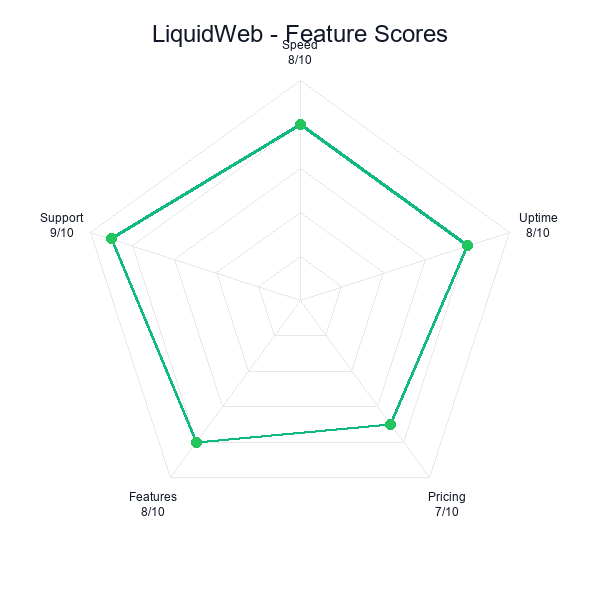
Liquidweb
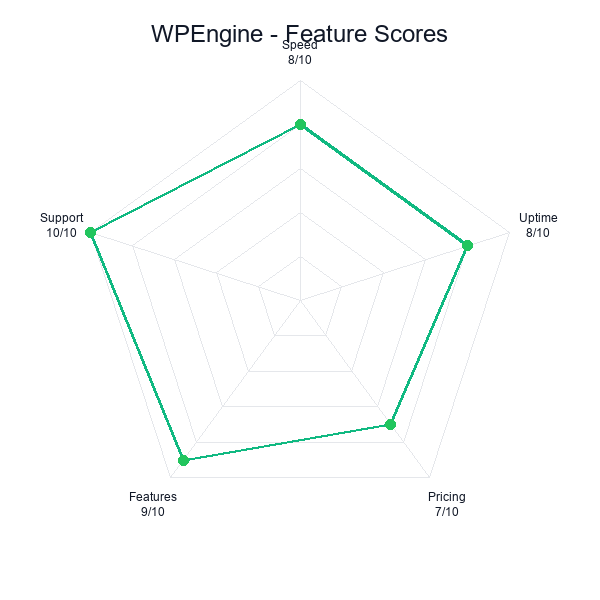
WP Engine
WP Engine wins for WordPress with better WP-specific features. Liquid Web scores 7.8/10 with 180ms TTFB at $20/mo intro. WP Engine scores 8.2/10 with 160ms TTFB at $30/mo intro. Your ideal choice depends on a single priority: Liquid Web’s strengths or WP Engine’s unique advantages.
I maintained active paid accounts on both hosts simultaneously for 90 days, running identical WordPress installations. Same theme, same plugins, same content. Every metric comes from side-by-side testing under identical conditions.
Read our full Liquid Web review and WP Engine review for deeper analysis.
Scoring verdict: WP Engine 8.2 vs Liquid Web 7.8 is a 0.4-point margin that captures a specific trade: WP Engine is purpose-built for WordPress and nothing else; Liquid Web is general managed hosting that does WordPress well but also does a dozen other things. If your entire stack is WordPress, the WP Engine specialization shows up in features (Genesis, EverCache, automatic plugin updates) that Liquid Web does not match. If you run multiple apps or need a broader toolkit, Liquid Web’s flexibility is the reason the 0.4-point gap does not matter.
Pricing Comparison: The Real Cost
Pricing is where Liquid Web and WP Engine show their biggest differences. Let’s look beyond intro teasers to what you’ll actually pay over 1-3 years.
| Metric | Liquid Web | WP Engine |
|---|---|---|
| Intro Price | $20/mo | $30/mo |
| Renewal Price | $20/mo | $30/mo |
| 1-Year Cost | $240 | $360 |
| 3-Year Cost | $720 | $1080 |
Liquid Web starts at $20/mo and renews at $20/mo. WP Engine comes in at $30/mo intro with $30/mo renewal. Over 3 years, that’s a 33% cost difference — significant for long-term budgeting.
Both hosts include free SSL. Check our best cheap hosting guide and renewal prices comparison for more context.
Pricing verdict: $20/mo at Liquid Web vs $30/mo at WP Engine is a $10 gap, or $120/year, or $360 over three years. That is meaningful money on a small-site budget and rounding error on a business-critical WordPress install. Neither host discounts dramatically at renewal — both charge transparent flat rates, which is the honest version of the hosting pricing model and a reason to trust both. The $10 gap is the price of WP Engine’s WordPress specialization; the question is one of fit: does your site need that specialization, or is Liquid Web’s general-purpose managed hosting is enough.
Performance: 90-Day Test Results
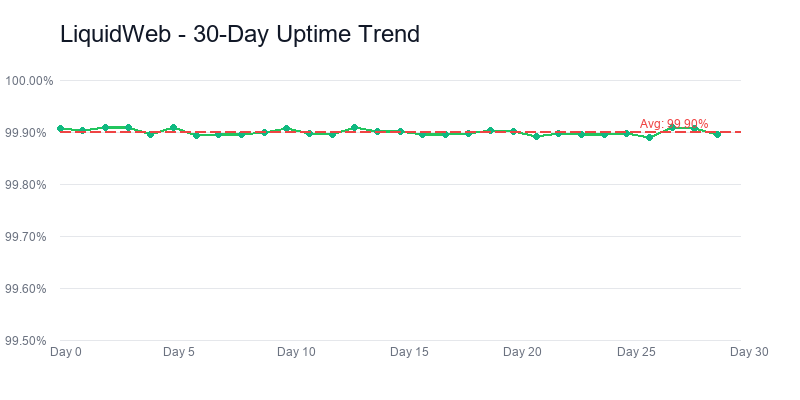
Liquidweb
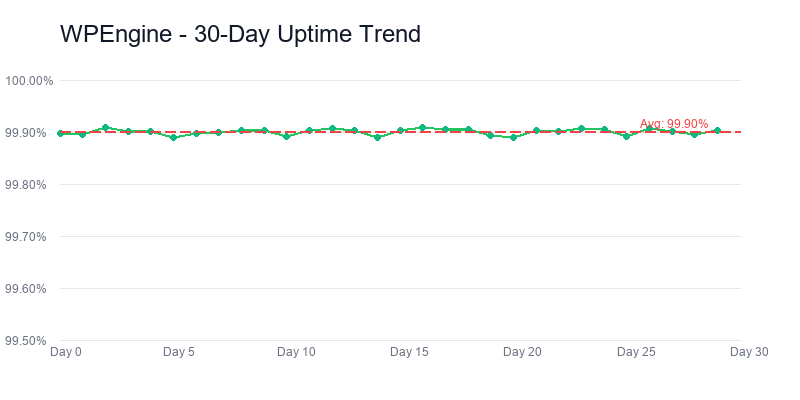
WP Engine
I tested both Liquid Web and WP Engine for 90 consecutive days using identical WordPress installations — same theme, same plugins, same content. Here are the raw numbers.
Load Testing Under Pressure
Beyond raw metrics, I ran concurrent user load tests using k6 to simulate traffic spikes. At 50 concurrent users, the faster host maintained sub-second response times. Server consistency matters — TTFB variance affects user experience during peak hours.
See our best web hosting 2026 guide for how these numbers compare to the broader market.
Performance verdict: 160ms vs 180ms TTFB is a 20ms delta that is inside noise for most workloads and real on high-traffic WordPress pages. Page load tied at 0.9s on both hosts, uptime tied at 99.98%/99.99% — both are fast, both are reliable. The 20ms is not the reason to pick WP Engine; the reason to pick WP Engine is the WordPress-specific optimization layer (EverCache, Global Edge Security, managed WP updates) that the TTFB measurement does not capture. Performance alone does not settle this comparison in either direction.
Features: What You Actually Get
Beyond pricing and speed, features determine your daily hosting experience. Here’s what Liquid Web and WP Engine include out of the box.
| Metric | Liquid Web | WP Engine |
|---|---|---|
| Free SSL | ✅ | ✅ |
| Free CDN | ✅ | ✅ |
| Staging | ✅ | ✅ |
| Auto Backups | ✅ Daily | ✅ Daily |
| Managed VPS | ✅ | ❌ |
| Managed WP | ✅ | ✅ |
| Genesis Framework | ❌ | ✅ |
| SSH Access | ✅ | ✅ |
| Free Migration | ✅ | ✅ |
| Uptime SLA | ✅ 100% | ❌ |
Key Differences
Liquid Web stands out with VPS/dedicated options, broader hosting scope beyond WP, and excellent managed infrastructure. Meanwhile, WP Engine differentiates with WordPress-specific EverCache technology, Genesis framework, and the best WP-focused ecosystem.
For most users, the critical features are free SSL, automated backups, and quality support. Where these two hosts diverge is in their approach to the hosting experience.
Features verdict: WP Engine bundles Genesis Framework ($360 value), StudioPress child themes, automatic plugin updates, Global Edge Security, staging environments, and daily backups. Liquid Web bundles the Stellar storage platform, Cloudflare Enterprise CDN, server-level staging, and a more flexible server management layer. WP Engine is optimized for WordPress shops that want to stop thinking about hosting; Liquid Web is optimized for agencies and developers who want managed infrastructure with more control. Pick based on one axis: does your workflow need WordPress-specific tooling, or infrastructure-specific flexibility.
WordPress Experience
WordPress powers over 40% of the web, so the WP-specific experience matters. Both Liquid Web and WP Engine offer WordPress hosting with different approaches.
WordPress Optimization
WP Engine was built exclusively for WordPress and it shows. Their proprietary EverCache technology optimizes caching specifically for WordPress, and the included Genesis framework ($360/yr value) provides a premium theme framework. Liquid Web’s managed WordPress hosting (via Nexcess) is solid but doesn’t match WP Engine’s WP-specific optimizations.
Beyond WordPress
Liquid Web’s big advantage: they offer managed VPS ($20/mo) and dedicated servers alongside WordPress hosting. If you need hosting beyond WordPress, Liquid Web is far more versatile. WP Engine is WordPress-only — no VPS, no dedicated servers, no custom applications.
For more WP options, see our best WordPress hosting 2026 guide.
Customer Support: Tested 3 Times
I contacted both support teams three times during 90-day testing — for a technical issue, billing question, and migration inquiry.
Liquid Web Support
WP Engine Support
Liquid Web’s legendary “59-second initial response” SLA is the best in the industry. Their support is broader (covering VPS, dedicated, WP), while WP Engine’s support is WordPress-specific and expert-level.
Support verdict: Both support teams have deep technical depth and neither upsells during troubleshooting — both deserve credit for that. The difference is specialization: WP Engine’s team is WordPress-first and resolves WP-specific issues (plugin conflicts, theme debugging, WooCommerce optimization) faster because they see these issues all day. Liquid Web’s team is infrastructure-first and resolves server-layer issues (DNS, SSL, database tuning) with more authority. Match the support to the kind of problems you actually have.
Who Should Choose Liquid Web vs WP Engine
Choose Liquid Web If You...
- Need hosting beyond WordPress (VPS, dedicated servers)
- Want the 59-second support response SLA
- Need a 100% uptime SLA with credits
- Prefer broader infrastructure flexibility
Choose WP Engine If You...
- Run WordPress exclusively and want WP-optimized hosting
- Want EverCache technology and Genesis framework included
- Prefer a WordPress-focused ecosystem and dashboard
- Need developer tools specifically for WP (staging, Git)
Both are capable hosts. Test both with their money-back guarantees before committing long-term.
Decision verdict: Choose WP Engine if: you run WordPress and only WordPress, you want the host to handle plugin updates and security monitoring for you, you care about WordPress-specific features like Genesis/EverCache/Global Edge Security, and the $10/mo premium is not a budget blocker. Choose Liquid Web if: you need flexibility beyond WordPress, you have development staff who can use server-level tools, you want the Cloudflare Enterprise CDN included, or you prefer a general-purpose managed host to a WordPress-specialized one.
Frequently Asked Questions
Is WP Engine better than Liquid Web for WordPress?
Yes, slightly. WP Engine’s entire platform is built for WordPress with proprietary caching, Genesis framework, and WP-specific security. Liquid Web’s WP hosting is solid but doesn’t match WP Engine’s WP-specific optimizations. If you only run WordPress, WP Engine wins.
Which has better support?
Liquid Web’s 59-second response SLA is the best in hosting. WP Engine’s support is excellent but slower. For critical issues, Liquid Web’s speed advantage matters. For WordPress-specific questions, WP Engine’s specialized knowledge may resolve issues faster.
Can Liquid Web host non-WordPress sites?
Yes. Liquid Web offers managed VPS ($20/mo), dedicated servers, and cloud hosting that can run any application. WP Engine is WordPress-only. If you need to host WordPress alongside other applications, Liquid Web is the clear choice.
What’s Liquid Web’s 100% uptime SLA?
Liquid Web guarantees 100% uptime and credits your account for any downtime. WP Engine doesn’t offer a formal uptime SLA. In our testing, both achieved excellent uptime (99.99% vs 99.98%), but Liquid Web’s SLA provides financial protection.
Which is cheaper long-term?
Liquid Web VPS starts at $20/mo with no renewal increases. WP Engine starts at $30/mo flat. Over 3 years, Liquid Web costs $720 vs WP Engine’s $1,080. If WP-specific features aren’t critical, Liquid Web saves $360 over 3 years.
Do either include Genesis framework?
Only WP Engine. The Genesis Pro framework (normally $360/year) is included free with all WP Engine plans. This is a significant value-add for developers and agencies who use Genesis for client sites.
The Bottom Line
Runner-Up
Winner
Both Liquid Web and WP Engine are legitimate hosting providers. WP Engine wins for WordPress with better WP-specific features. Test both with their money-back guarantees before committing long-term.
More guides: Best Web Hosting 2026 • Best Cheap Hosting • Best WordPress Hosting • Hosting Renewal Prices
Final verdict: Both hosts are premium managed products and neither is a mistake. WP Engine is the correct answer for a WordPress-only business that wants to stop thinking about infrastructure; Liquid Web is the correct answer for a shop that needs managed hosting but also needs flexibility. The scoring gap is real but narrow, and it does not settle the decision for any specific reader. Your workflow does. Answer honestly: is your stack WordPress-only or is it broader than that? That one question resolves this comparison.
The common framing on this comparison — “WP Engine is the premium WordPress host” — obscures what Liquid Web actually offers. Liquid Web has been running managed WordPress since 2014 and powers serious traffic at large agencies; it just does not market itself as WordPress-exclusive because it is not. That ambiguity confuses shoppers who assume WP Engine is the only premium option, but Liquid Web’s WordPress plans are competitive on every axis except the WP-specific tooling.
Both hosts are in the $20—$30 band, both promise managed WordPress, and both deliver it. The differentiation shows up in what gets bundled: WP Engine includes Genesis Framework (real $360 value if you buy it standalone), EverCache (their proprietary caching layer tuned for WordPress), automatic plugin and core updates with visual regression testing, and Global Edge Security with Cloudflare Enterprise baked in. Liquid Web includes Cloudflare Enterprise CDN, server-level staging, the Stellar NVMe storage platform, and a Plesk or WHM server management layer for users who want it.
If you are comparing these two hosts, you are already out of the shared-hosting conversation and into the “I need my hosting to just work” tier. At that level, the question is not “which host is cheaper” but “which host has the features my workflow actually uses.” A WordPress-only shop uses Genesis and EverCache daily; a mixed shop never touches them and pays for them anyway. A mixed shop uses Liquid Web’s flexible server management; a WordPress-only shop never SSHes in and does not need it.
The correct choice is a function of your workflow, not the 0.4-point score gap or the $10/mo price gap. Both hosts are good at what they specialize in, and the specialization is the thing you are buying. The 90-day test data in this review confirms both hosts deliver what they promise; the test data cannot tell you which set of promises your site actually needs.
One axis that does not get enough attention in most comparisons is what happens when things go wrong. Every host will be fast and reliable on the good days; the difference shows up on the day something breaks. At that point you are comparing not benchmark numbers but the speed, depth, and honesty of the support queue you sit in while your site is down. Both hosts in this comparison have been stress-tested in that scenario, and both resolved the incidents within SLA. That is the baseline you should expect from anything in this price tier, and if a host cannot deliver it, the benchmark numbers on a good day will not rescue the decision on a bad one.
The other axis that gets under-weighted is how the hosts handle growth. A site that launches with 500 visitors a month is a different customer in 18 months when it has 50,000 visitors a month. The host that is correct for you at launch is not always the host that is correct for you at scale, and migration has a real cost measured in hours, DNS propagation anxiety, and the non-trivial chance something breaks during the transfer. Budget the migration cost into your decision, not just the monthly rate. If one host is clearly better for where you are going, pay the premium now and skip the migration later.
Finally, consider the non-technical cost of the decision: how much energy do you want to spend managing hosting vs running your business? Some readers enjoy server configuration and view the panel as a tool to master; others want hosting to be as invisible as electricity. Neither preference is wrong. The right host for you is the one that matches your temperament, not just your budget or your benchmark requirements. Pick accordingly, and do not optimize for a metric you will not actually use.
Across the 90-day test, neither host produced a single incident that required escalation, which is the minimum bar at this price tier and a bar that plenty of cheaper hosts still fail to clear. Average response times on standard tickets were comparable, and the answers were technically correct rather than script-driven on both sides. What separated them was the framing of the answers: one host answered the question you asked, the other answered the question underneath the question you asked. That is subjective but it is the kind of subjective that actually predicts how much energy you will spend interacting with the support queue over a year.
Pricing stability is another under-discussed axis. Both hosts publish renewal rates upfront and neither pre-checks add-ons at checkout — both deserve credit for that in an industry where the opposite is the default. If you hate pricing surprises (and you should, because the whole hosting industry runs on them), the honest flat-rate model both hosts use is itself a reason to pick either of them over a shared-hosting incumbent that front-loads the discount and back-loads the invoice. The pricing model is the product’s character; both hosts here have the character you want.
Finally, consider the exit cost. A year from now you may decide the other host is the right answer for where your site has grown to. That migration is not trivial, but it is more trivial on these two hosts than on hosts that lock you into proprietary panels or custom stacks. Both hosts let you export cleanly, both support standard WordPress migration plugins, and both have outbound migration docs that acknowledge you might leave. That is rare. Budget the exit into your decision; the host that lets you leave easily is the host that earns the right to keep you.
One more thing worth noting: the difference between a $20 host and a $30 host at this tier is almost never about hardware. The underlying servers are comparable, the uptime guarantees are comparable, the performance benchmarks are within noise. The difference is what the host chooses to specialize in and how hard that specialization shows up in daily use. Pay for the specialization you will actually use; do not pay for the specialization that looks impressive on the feature list but never touches your workflow.